
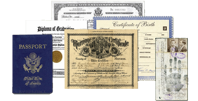
What information can I record in Family Management Software?
- Personal Identification
- Banking Records
- Credit and Debit Cards
- Educational History
- Employment History
- Home - Mortgage, Capital Improvements, Fixing Up Expenses, Acquisition Costs
- Other Real Estate
- Insurance Policies
- Investment Activity & History
- Medical Records - Costs, Prescriptions, Medical History, Appointments
- Personal Property
- Inventory
- Survivors Checklist
- Vehicles
- Warranties
- Will
While this valuable data is security protected, you should consider providing access to others who may need the information in the event of your death, or if you are seriously injured or ill and unable to communicate your wishes.
Why keep records?
- Loss of personal property. If you lose personal property due to a disaster or theft, you must provide your insurance provider with information/pictures on the lost property or damage caused by the disaster or theft.
- Stolen or lost credit cards. If you lose your wallet can you quickly reconstruct your credit card data?
- Injury or illness. If you are seriously injured and need someone to assist you with your affairs would they be able to locate the information they need?
- Death. If you passed away unexpectedly, would your next of kin know your last wishes? Would they know where to find all the information needed to administer your estate?
- Expenses. You may forget an expense unless you record it when it occurs. You can use your records to identify expenses for which you can claim a deduction such as medical expenses. This will help you determine if you can itemize deductions on your tax return.
- Basis of real estate. You need to keep records that show the basis of your real estate. This includes the original cost or other basis of the property and any improvements you made.
- Medical history. Frequently your physician will ask for your medical history. Can you remember all the dates and specifics of the medical events?
- Identity theft. Identify theft is one of the fastest growing crimes in America today. If you become a victim, you may need much of the vital information stored in Family Management Software.
- Tax returns. You need records to prepare your tax return. Good records help you to file quickly and accurately.
How Should I Keep My Records?
Vital documents should be organized and stored in a safe place such as a safe deposit box and/or a home safe or security box that can withstand temperatures up to 1700 degrees. If you plan to buy a safe and have a basement, this is the best place to install it.
Original records that would be difficult to replace should be stored in a safe deposit box at a bank or financial institution that is some distance from your home. This will reduce the chance that both your home and the bank would be affected by the same disaster.
You should make copies of all the records you plan to store in your bank safe deposit box. Store these records at home in your security box or safe.
Be sure to keep the safe locked at all times and record in Family Management Software where you keep the key or combination to the safe or security box. Be sure another member of your household knows where the key or combination is.
Here are some general guidelines you may follow:
Safe Deposit Box
- Copy of your Family Facts Report from Family Management Software
- Medical records
- Tax returns for the past three years
- A list of user IDs and passwords for your online accounts
Home Safe or Security Box
- Copy of your Family Facts Report from Family Management Software
- Tax returns
- Home improvement records
- Warranties and receipts for major purchases
- Appraisals of jewelry, collectibles, artwork, and other valuable items
- Retirement account records
- Recent checking, savings, and investment account statements
- Rental agreement/lease and/or mortgage documents
- Recent pay stubs
- List of emergency contacts, including doctors, financial advisers, and family members
- Backups of critical computer data
- Safe deposit box key
- Copies of your health insurance card
If you have a scanner connected to your computer, you should consider scanning your records and saving them electronically to either a CD or DVD or through an online backup service.
Store a copy of the CD or DVD in your safe deposit box, your home safe and give a trusted friend or relative, as well as your attorney, a copy with instructions on what to do if something were to happen to you. If they live close to you geographically, you may want to consider someone who lives in a different area since they may not be victims of the same disaster.
Your personal property inventory should also include photographic records--either photos or videos. You should photograph all items of significant value. This should include jewelry, furniture, antiques, collectibles, computer and stereo equipment and anything else you consider valuable. Use Family Management Software to record all information about your personal property.
What Records Should I Keep?
Records for Tax PurposesAccording to the Internal Revenue Service you should keep the following documents as basic records. These records prove your income and expenses. If you own a home or investments, your basic records should contain documents related to those items. More details on tax record keeping are available in IRS Publication 552, Recordkeeping for Individuals Records for Nontax Purposes |
|||||||||||
| |||||||||||
Additional RecordsThe IRS also suggests you keep records on the following topics if they pertain to you. We suggest you consult the IRS web site http://www.irs.gov to learn more about these topics and their record retention requirements. |
|||||||||||
Alimony
|
|||||||||||
Business Use of Your Home
|
|||||||||||
| Casualty and Theft Losses | |||||||||||
For a casualty loss:
|
For a theft loss:
|
||||||||||
| Child Care Credit: Name, address, and taxpayer identification number for all persons or organizations that provide care for your child or dependent. | |||||||||||
| Contributions: The kinds of records you must keep for charitable contributions depend on the amount of the contribution and whether the contribution is in cash. | |||||||||||
| Education Expenses | |||||||||||
| Health Savings Account (HSA) and Medical Savings Account (MSA): Name and address of each person you paid and the amount and date of the payment. | |||||||||||
Individual Retirement Arrangements (IRAs)
|
|||||||||||
Medical and Dental Expenses
|
|||||||||||
| Mortgage Interest: Form 1098, Mortgage Interest Statement. | |||||||||||
Taxes
|
|||||||||||
| Property: Keep records relating to property until the period of limitations expires for the year in which you dispose of the property in a taxable disposition. You must keep these records to figure your basis for computing gain or loss when you sell or otherwise dispose of the property.Generally, if you received property in a nontaxable exchange, your basis in that property is the same as the basis of the property you gave up. You must keep the records on the old property, as well as the new property, until the period of limitations expires for the year in which you dispose of the new property in a taxable disposition. | |||||||||||
Records for Non-tax PurposesIndividual Records |
|
|
|
How long should I keep my records?
You must keep your records as long as they may be needed for the administration of your own or your familys personal affairs plus any provision of the Internal Revenue Code. Generally, this means you must keep records that support items shown on your tax return until the period of limitations for that return runs out.
The period of limitations is the period of time in which you can amend your return to claim a credit or refund or the IRS can assess additional tax. You may consult the IRS for the period of limitations.
The following is a suggested records retention program:
| Record | Retention Period |
| Tax returns | Forever |
| Tax return documentation | 6 years |
| Contracts | Forever |
| Real estate records | Forever |
| Last pay stub of a job if you leave that job | Last pay stub of a job if you leave that job |
| Last pay stub of the year for your current job | Last pay stub of the year for your current job |
| Mortgage payment checks (statements) | Until mortgage is paid off |
| Student loan payments | Until loan is paid off |
| Car loan payment stubs | Until the loan is paid off |
| Cancelled checks | 7 years |
| Bank deposit slips | 7 years |
| Bank statements | 7 years |
| Home improvement records | Ownership period plus 7 years |
| Investment records | Ownership period plus 7 years |
When your records are no longer needed for tax purposes, do not discard them until you check to see if they should be kept longer for other purposes. Your insurance company or creditors may require you to keep certain records longer than the IRS does.